Written 12 September 2026. Rates and forms move — this describes the shape of the document, not a ruling, and your accountant signs the invoice.
A quotation and an invoice are different documents doing different jobs, and travel businesses run into trouble by treating the second as the first with the word changed. A quotation is an offer you can revise. An invoice is a tax document that says a supply happened, and it has required contents.
What the invoice has to carry that the quotation does not
- Your GSTIN, and the client's if they have one. A corporate client who wants to claim anything needs their number on it, and asking afterwards is a reissue.
- An invoice number from an unbroken series. Not the quotation reference, and not a number you skipped because a draft was cancelled.
- The SAC. Tour operator services sit under 998555, and stating it is not optional. How many digits you must show depends on your turnover under the CBIC rules, so confirm which band you are in rather than copying a figure off another operator's invoice.
- The rate you actually chose, applied consistently. 5% on the gross package with no input credit, or 18% with it. The choice shows up on every invoice and in every return, and an operator issuing some of each is an operator with a question to answer.
- Place of supply. Which decides whether it is CGST plus SGST or IGST, and it is not always where your office is.
- The gross amount, with transport and accommodation identified. The 5% entry is on the gross tour value, so the document should show what that gross is composed of.
The three structures produce three different documents
This is the part that catches people, because the same trip invoices differently depending on how you sold it.
- Package, 5% no credit. One supply, one line, tax on the gross. Simple, and the embedded GST on your hotel bills is your cost — so it belongs in your rate card, not discovered at the margin.
- Package, 18% with credit. Same single supply, different rate, and now the supplier invoices matter: credit you cannot evidence is credit you do not have.
- Pure agent. You invoice your commission and pass the supplier costs through at actuals. The supplier's own bill becomes part of what the client receives, which changes the document substantially — and means the client can see what you paid.
Pick one per client and stay in it. GST and TCS on a tour package covers the rates themselves and the hotel slabs underneath them.
TCS is not a tax line on your invoice
Worth stating because it is the commonest presentation error on an overseas package. GST is tax on your supply. Tax collected at source is not — it is the traveller's own tax, collected by you in their name, and it is not part of the taxable value of what you sold. It belongs as a separate collection line, described as such, not added into the tax block as though it were another rate.
The quotation should already look like the invoice
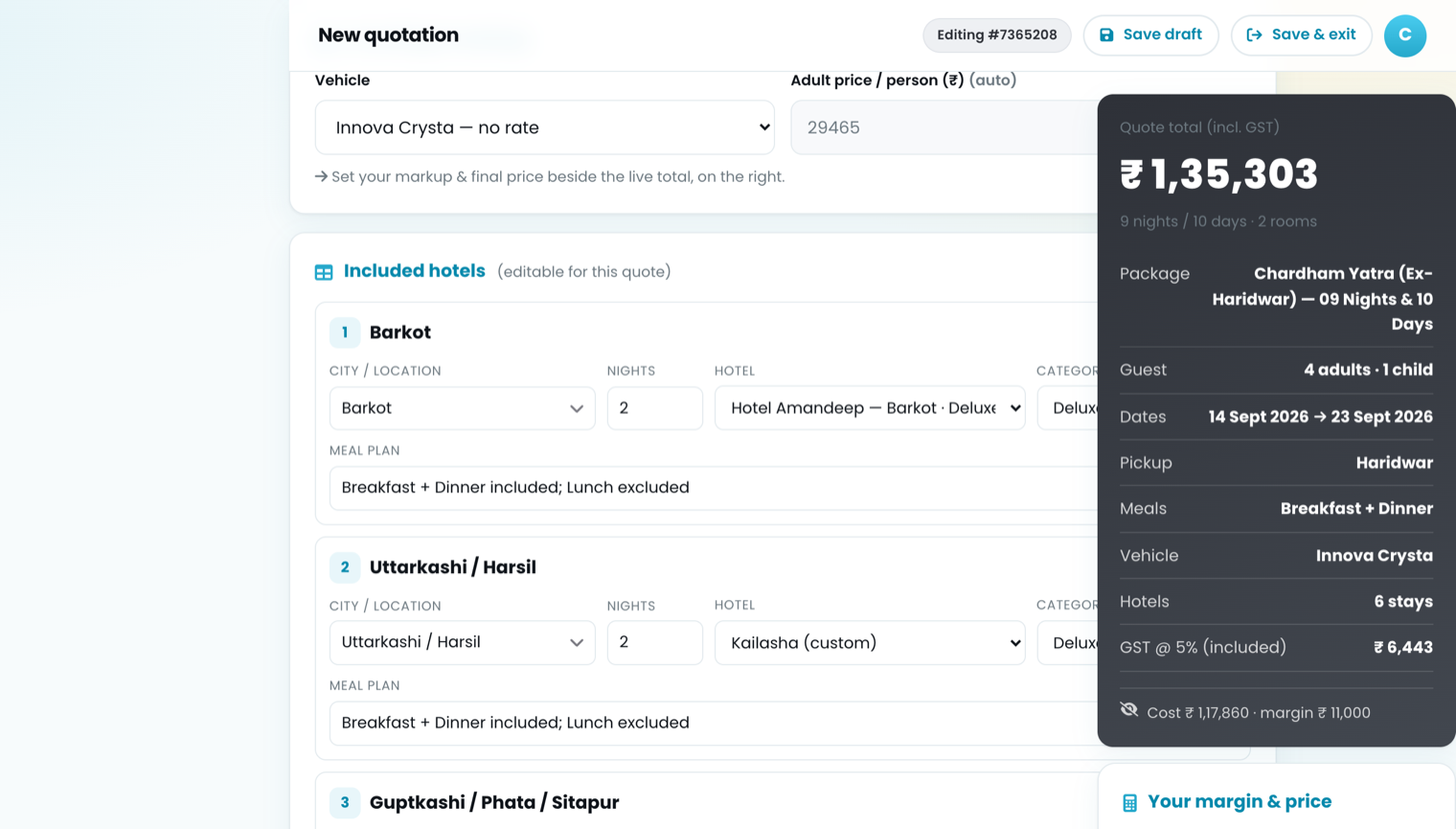
The practical advice underneath all of this: build the quotation so that the invoice is the same numbers with an invoice number on top. If your quotation shows a blended "all inclusive" figure and your invoice has to break out gross, tax and collection, then somebody is doing that arithmetic again at the point of payment — which is late, unrecorded, and where the two documents start disagreeing with each other.
What a travel quotation must include lists the blocks; the ones that matter here are the gross, the tax stated at its rate, and any collection shown separately.
Two things worth fixing before your next audit
- Credit notes. A cancellation with a refund is a credit note against the invoice, not a deleted invoice. Deleting breaks the series, and the series is the first thing anybody checks.
- Advance receipts. Money taken before the supply has its own treatment. If you are taking deposits months ahead — and you are — this is worth ten minutes with your accountant rather than a guess.
Common questions
What is the SAC code for tour operator services?
998555. Stating it on the invoice is not optional. How many digits you must show — four, six or eight — depends on which turnover band you are in under the CBIC rules, so confirm your own band rather than copying a figure off another operator's invoice.
What must a tour operator's GST invoice show?
Your GSTIN and the client's if they have one, an invoice number from an unbroken series, the SAC, the rate you actually chose applied consistently, the place of supply, and the gross amount with transport and accommodation identified — the 5% entry is on the gross tour value, so the document should show what that gross is made of.
Should TCS appear as a tax line on the invoice?
No. GST is tax on your supply; tax collected at source is the traveller's own tax, collected by you in their name, and it is not part of the taxable value of what you sold. It belongs as a separate collection line described as such, not folded into the tax block as though it were another rate.
Can I cancel an invoice if the trip is cancelled?
A refund is a credit note against the invoice, not a deleted invoice. Deleting breaks the number series, and the series is the first thing anybody checks. Money taken before the supply — which is every deposit you hold — has its own treatment, and that is a ten-minute conversation with your accountant rather than a guess.
Stop rebuilding the same quotation.
One rate card, one branded document, sent in minutes instead of an afternoon.
See what it does