A hotel rate sheet arrives as a WhatsApp image or a PDF with four numbers on it. Six months later a booking is disputed because the season ended on the 30th rather than the 31st, or because the child rate turned out to apply up to eleven and not twelve. None of that is the hotel being difficult. It is a rate sheet that was never finished.
These are the things to settle before you load a contract into your system, in the order they tend to bite.
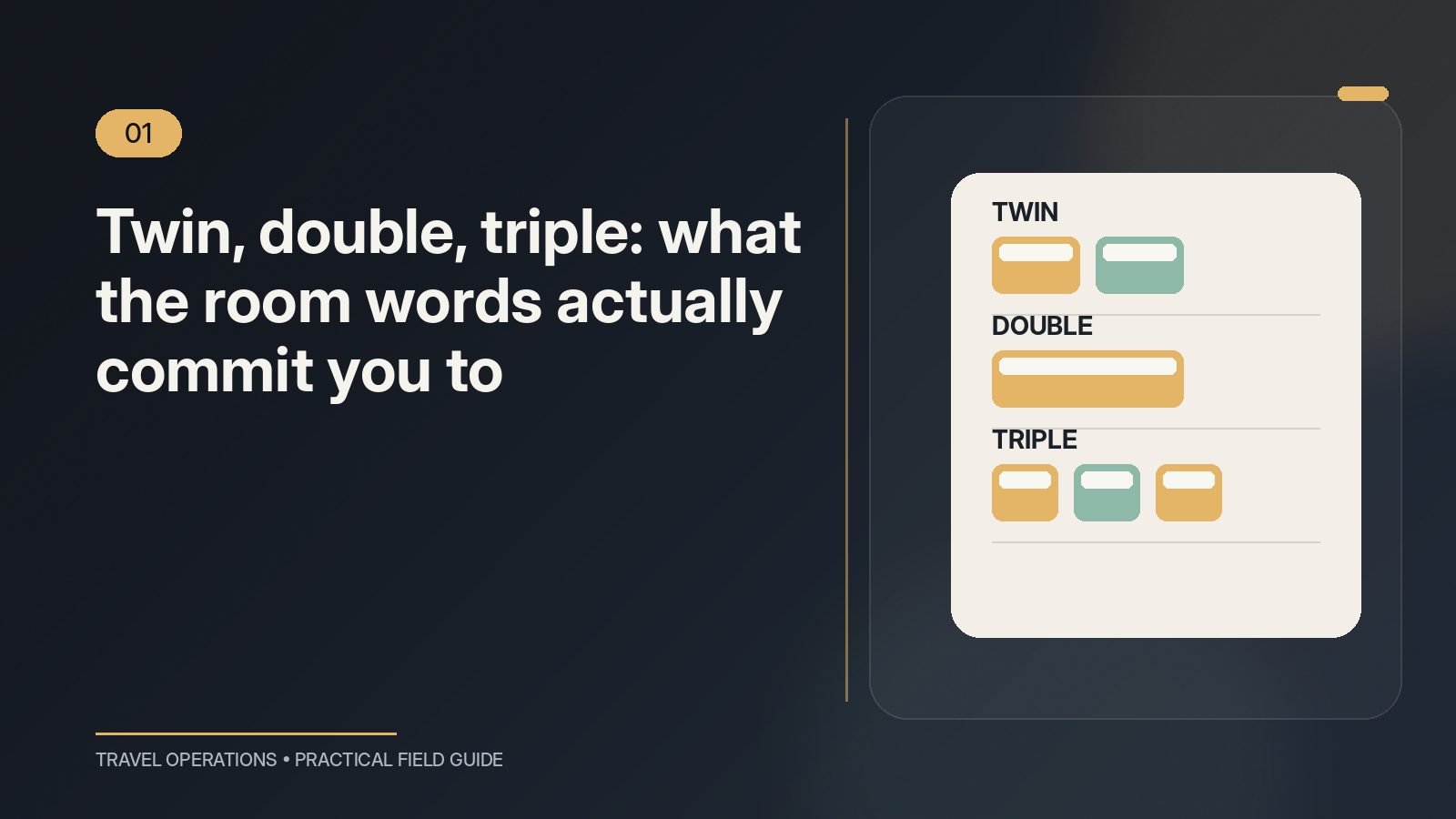
Room categories, named the way you will quote them
"Deluxe" at one property is "Super Deluxe" at the one next door and "Premium" in the sheet a third one sends. Agree the name you will use in your quotations and write it on the contract, so the room your client is promised is the room the hotel has confirmed.
Season dates, with both ends
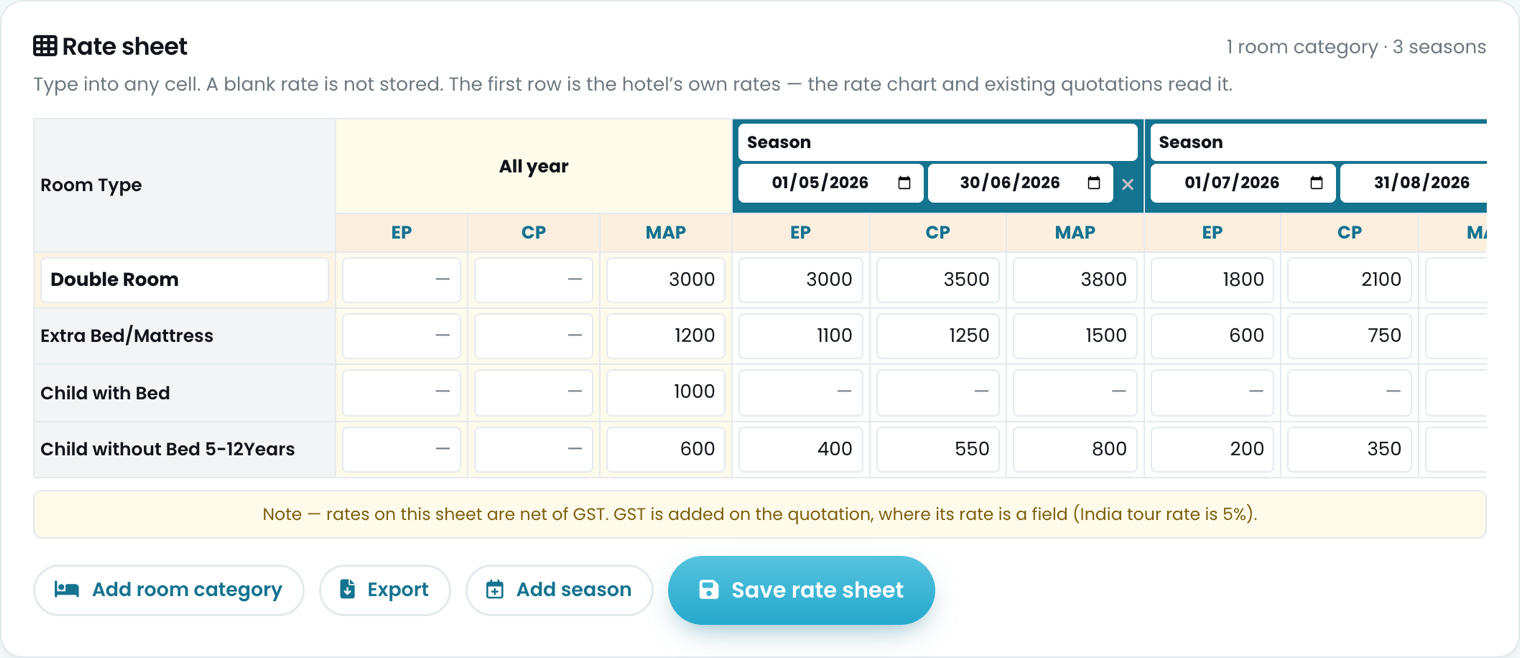
Every rate needs a from-date and a to-date, in full. "Peak season" is not a date range, and a long itinerary crosses more than one of them — a ten-day trip departing at the end of June is priced on two sheets, not one, and the hotel will invoice it that way whatever your quotation said.
Meal plans as separate prices
EP, CP and MAP are three rates for the same room, not one rate with a note attached. Get all three where the hotel offers all three; a blank is fine and honest, a guess is neither. Your hotel rate sheet is the quotation shows what that grid looks like once it is loaded.
The extra bed, and both child rates
- Adult extra bed — a rate, not a percentage of the room, however tempting.
- Child with bed — its own rate.
- Child without bed — its own rate again, and often the one nobody asks for until a family books.
- The age brackets. "Child" is a number on a contract: 5–11, 0–4 complimentary, twelve and over an adult. Write the ages down. This is the single most disputed line in hotel contracting.
Net or gross of tax — say which, once
A rate sheet should be net of tax, with tax handled once on the quotation. If a hotel quotes gross, mark the sheet as gross rather than quietly subtracting; a mixed set of rates where some carry tax and some do not is impossible to audit six months later.
Blackout dates and surcharges
Long weekends, festival dates, a local wedding season. Ask for them in writing at contracting time — a surcharge that appears at booking time is a margin you have already sold.
Release period, cancellation and payment terms
How long the hotel holds an unconfirmed room, what cancellation costs at each stage, and when payment is due. These belong in the contract file next to the rates, because they are what you will copy into your own quotation's terms.
Who confirms, and how
One name, one number, one email that answers. A rate sheet from a property where bookings are confirmed by whoever picks up the phone is a rate sheet you cannot rely on in April.
Then load it once
A contract that lives only in a PDF gets retyped into every quotation, and every retyping is a chance to be wrong. Loaded properly — category by category, season by season, meal plan by meal plan — it is looked up rather than remembered, and a rate change is one edit rather than a hunt through last month's documents.
Our own desks contract this way across five countries; the shape of the result is on the packages page, and what a travel quotation must include covers what the client eventually sees.
Stop rebuilding the same quotation.
One rate card, one branded document, sent in minutes instead of an afternoon.
See what it does