The same nine-night itinerary, quoted three times in a week: once for a couple, once for a family of four, once for six friends. Same hotels, same route, same vehicle class. Three completely different per-person prices — and if yours come out close to each other, something in the costing is wrong.
Here is where the difference actually comes from, and how to present it without inviting an argument.
Per person is not the total divided by heads
A trip has costs that split cleanly and costs that do not. Rooms split by how people sleep, not by how many they are. The vehicle does not split at all until the party outgrows it, and then it jumps. Entry fees and permits are per head. Mixing these into one average and dividing is how a quote for two ends up subsidised by a quote for six.
Rooming is the first question, not the last
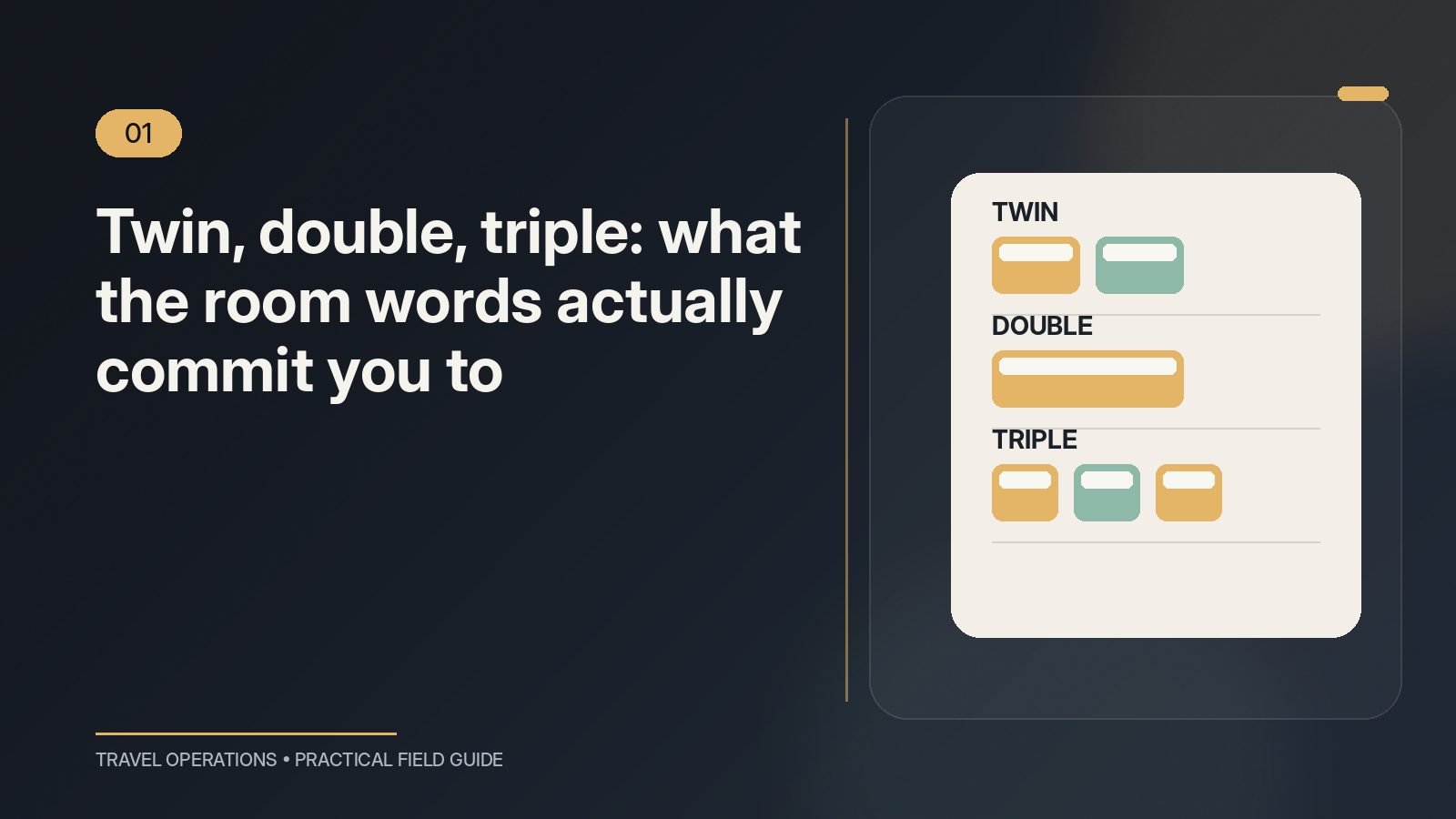
Two adults are one room. Four adults are two rooms — unless three of them will share, which a double will take with an extra bed. Six adults are three rooms, or two rooms with two extra beds, and those are different numbers.
- The base fare covers two adults in a room. Everything after that is an addition, not a division.
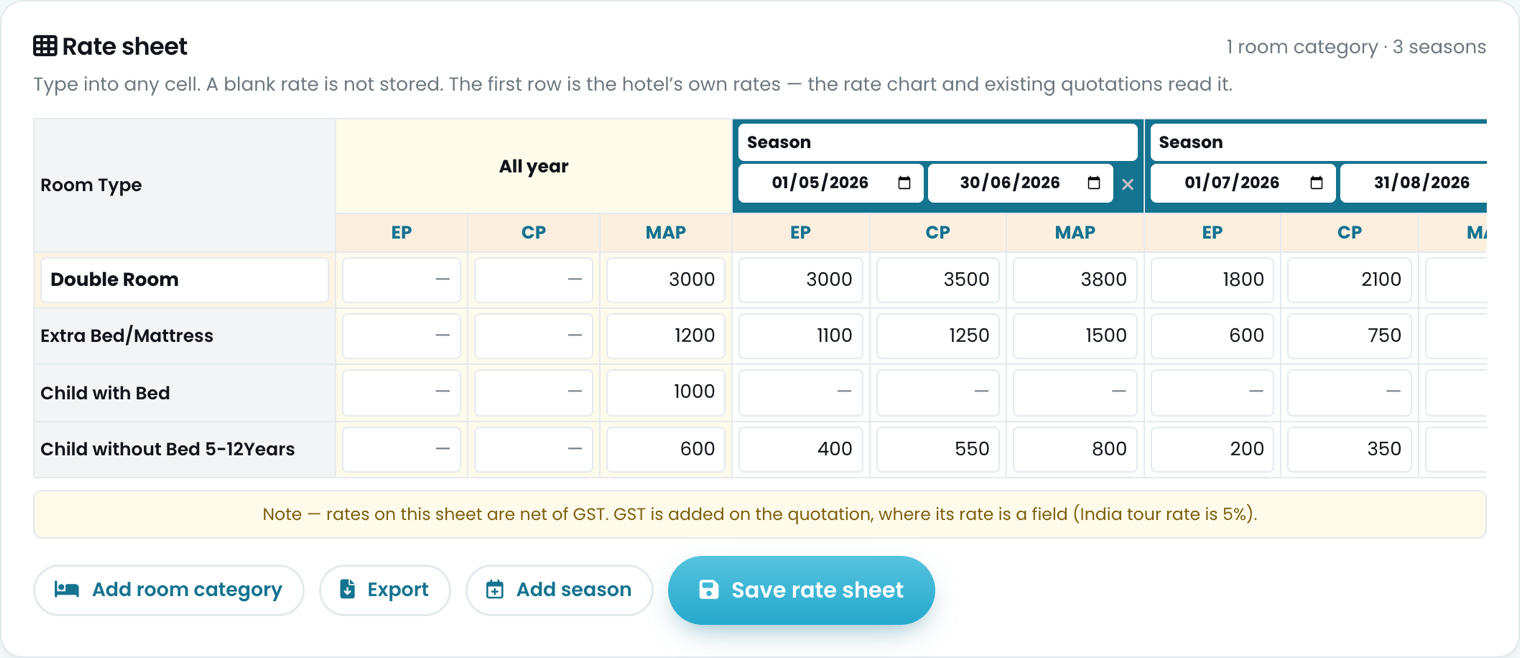
- A third adult is an extra bed, at the extra-bed rate on that hotel's sheet — not half a room, and rarely half the room rate.
- A child with a bed and a child without a bed are two different rates, and both are different from an adult. A nine-year-old and a three-year-old on the same booking are usually two different lines.
Say which of these you have assumed. A per-person figure quoted without its occupancy will be read as the cheapest possible reading of it, every time.
The vehicle moves in steps
Two travellers and four travellers often ride in the same sedan at the same day rate, so the per-person transport cost halves. Add a fifth and the sedan becomes an Innova; add a seventh and the Innova becomes a tempo traveller, or a second vehicle. The cost per person does not fall smoothly with party size — it drops, drops, then jumps.
This is why the honest way to quote several party sizes is to price each one, rather than taking a per-person number from the six-pax version and offering it to a couple.
What actually falls with party size
- The vehicle — until the next step up.
- The driver's allowance and parking — one driver, however many seats are filled.
- Any fixed guide or permit fee charged per vehicle rather than per head.
What does not
- Rooms, which follow the rooming plan.
- Meals, which are per guest per day.
- Entry tickets, pony and palki, helicopter seats — per person, always.
Quote the slabs, not one number
The clean way to present this to an agent or a family is a small table: 2 pax, 4 pax, 6 pax, each with its own per-person price and its own rooming assumption. It takes one line more than a single figure and removes the entire negotiation about what the figure assumed.
It also protects you when the party changes. A family that books for four and travels as three is a repricing, not a discount — and a quotation that already showed the 2-pax and 4-pax numbers makes that conversation arithmetic rather than a dispute.
Where the software helps
Change the party on a travee+ quotation and the rooming, the vehicle and the per-person price all move together, because they are derived from the same record rather than typed three times. Change a night and the same thing happens. What you are keeping consistent by hand in a spreadsheet is exactly what a costing engine is for — see how to price a Char Dham quotation in ten minutes for the whole flow.
And whatever slab you send, put the occupancy next to the number. Every line of a quotation that can be read two ways will be — what a travel quotation must include has the rest of them.
Stop rebuilding the same quotation.
One rate card, one branded document, sent in minutes instead of an afternoon.
See what it does